Coins
Gold and silver coins, silver dollars, certified coins and proof sets in Lawrence
Buy from the case or sell what you have. Dean at the Kansas Coin Connection counter will show you the coin, tell you what he sees, and give you an honest price.
What is in the coin case
Walk into the shop on Illinois Street and the coin case is the first thing that stops people. Gold and silver coins sit near silver dollars and sterling silver. Wheat pennies and Indian cents share the glass with Buffalo nickels, and a tall case holds US Mint silver proof sets and wartime nickel sets.
PCGS and NGC certified coins are mixed in with raw ones on purpose. You can pick up a question about one and answer it by looking at the other, which is hard to do on a screen. Dean works the counter himself, so the person who bought the coin is the person who can tell you about it.
Whether you are filling holes in a set or picking out a first silver dollar, the cases are stocked and the inventory is on daily display, so you can look at the actual coin before you decide.
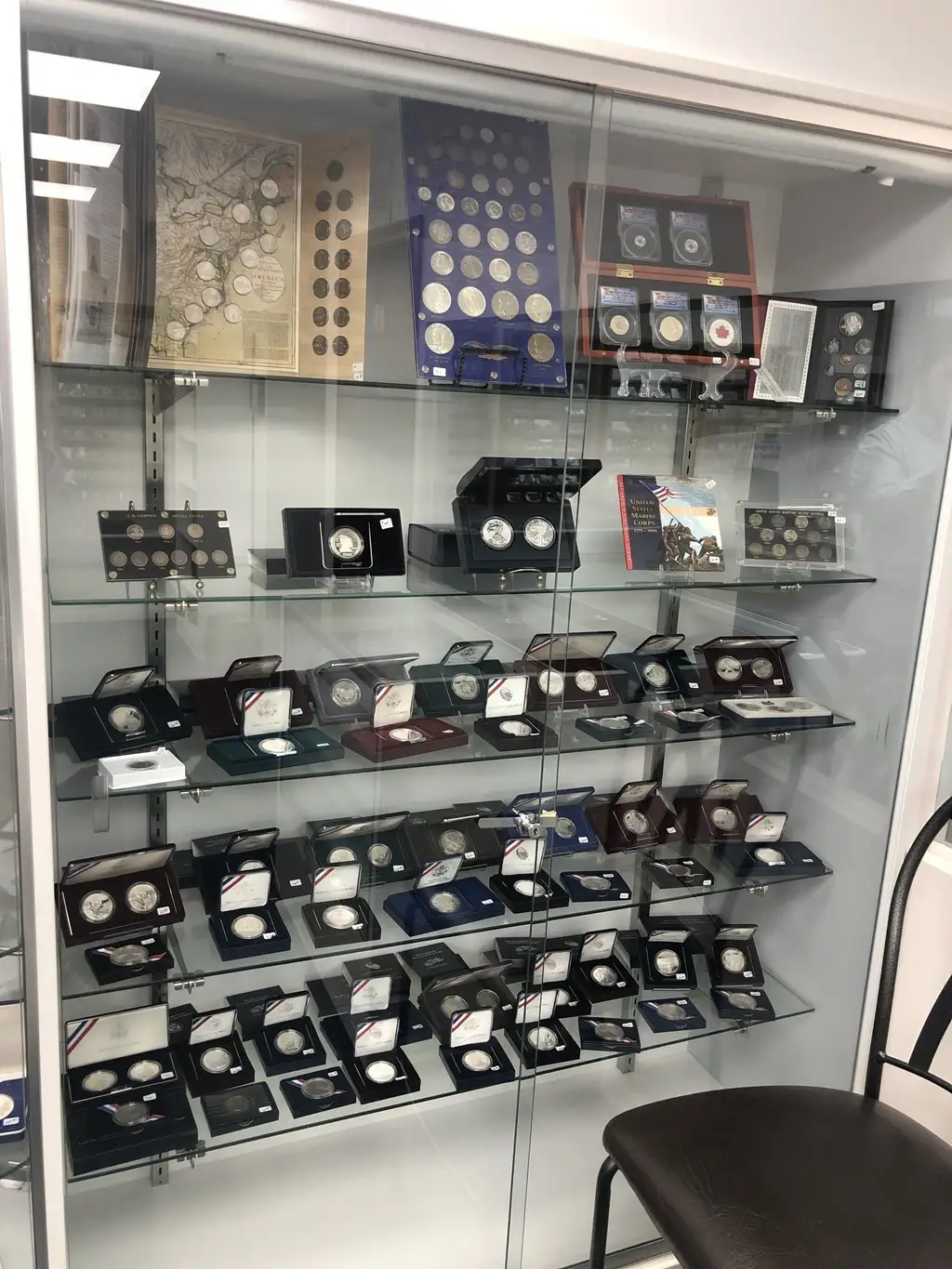
Tall glass case of US Mint silver proof sets and wartime nickel sets at Kansas Coin Connection
Certified or raw, and why the grade moves the price
A PCGS or NGC holder is a sealed plastic slab with a label. The label names the coin, its date and mint, and a grade on the 70-point Sheldon scale. A third party looked at it, graded it and sealed it, so a buyer who has never met the seller can still trust what is inside. That is why a certified coin is easy to compare and easy to resell.
Grade moves price because collectors pay for condition more than for age. Two coins of the same date and mint can sit far apart in value when one shows wear on the high points and the other looks nearly as struck. A single grade step on a scarce coin can matter a great deal, which is why the holder label is worth reading before the price.
A raw coin has no slab, so you are relying on the dealer's eye. After 40 years as a coin dealer, Dean can give you an honest read on a raw coin at the counter, and the free informal appraisal costs you nothing. Call (913) 426-2567 if you want to ask about a particular piece before you drive in.
Never clean a coin, and how to carry it in
The most common mistake across any dealer's counter is a coin that someone has cleaned. Polish, baking soda, a pencil eraser and a jewelry dip all leave tiny scratches or a dull, unnatural shine that a collector spots at once. A cleaned coin can lose much of its collector value, and nothing undoes it. Bring coins exactly as you found them, tarnish and all.
For storage and handling, hold a coin by its edge, never by the faces, and do it over something soft. Keep coins in paper envelopes, flips or holders made for them, away from damp basements and PVC plastic, which can leave a green film. Do not tape, glue or write on a holder with a marker.
Inherited a jar or a cigar box? Do not sort it, do not rinse it, and do not toss the odd-looking ones. Carry it into the shop on Illinois Street in the same container and let Dean look through it at the counter. Tuesday to Thursday, ten to five is walk-in. Other days, call first.
“There’s just something about getting to see what you’re buying in person that you’ll never get from eBay.” Timothy B., quoted on the shop’s own website.