Selling Silver or Gold When Prices Are Moving: How an In-Person Offer Works
A little preparation turns a nervous sale into a straightforward conversation.
October 13, 2026 · 3 min read
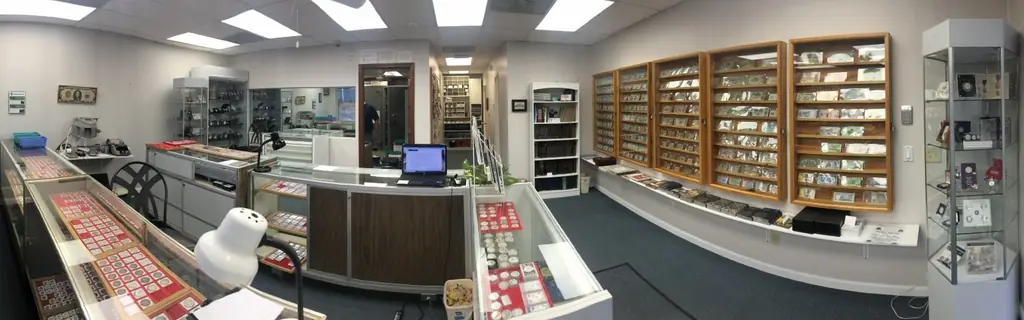
When the price of silver or gold is in the news, people start looking through drawers. A chain nobody wears, a set of sterling flatware, a few old coins, maybe a bar bought years ago. Prices that jump around can make the whole idea of selling feel risky, and the pressure to act quickly is real. This guide is about how an in-person offer works at a local counter, so you can walk in with the right questions and without guessing. It won't predict where prices go. Nobody can do that, and you should be wary of anyone who says they can.
Spot price is a starting point, not the offer
The spot price you see online is a benchmark for metal traded in large quantities. A dealer who buys from the public has to test and weigh what comes across the counter, sort it, and resell or refine it later. The offer you hear reflects that work and the dealer's read of the market that day. So the number you hear at a counter and the number on a screen will differ, and that gap on its own isn't a sign of anything wrong. What matters is whether the person can explain how they got to their figure.
What a buyer looks at
A good buyer starts by identifying what each piece is. Markings stamped inside rings and on the backs of pendants, and hallmarks on flatware, give clues about the metal. The buyer will also weigh the items and may test them. Coins and bars are sorted by type, since a plain bar is judged mostly as metal while a collectible coin may be judged on more than that.
Sterling silver, gold, silver and platinum jewelry are all different categories, and mixing them in one bag makes the conversation harder. Bring things sorted if you can, and expect the buyer to separate them again anyway.
Why some coins aren't priced as metal alone
Older silver and gold coins sit in a gray zone. Some are worth little more than their metal. Others carry collector interest that can place them above it, based on date, mint mark and condition. If you sell a coin as scrap before anyone has examined it, you can't know which kind you had. That's a reason to have coins looked at as coins before they go into the same pile as broken jewelry.
Before you go: a short checklist
- Gather everything you're considering in one place, and sort it by type if you can.
- Don't polish or clean anything. A shiny surface can lower a collectible's appeal.
- Look for stamps and markings, and note any paperwork or purchase records you still have.
- Decide ahead of time what you actually want to sell and what you want to keep.
- Ask how the offer was reached, and feel free to compare it with another buyer.
Decide your own number, not the headline's
Moving prices tempt people into two mistakes. Some rush to sell because they fear a drop, and others hold out for a number they've heard someone else got. Neither helps you much. A better approach is to decide what you need the money for, listen to a fair offer, and compare it with what you'd be comfortable with. If the offer meets that, take it. If not, you can walk out and think it over. A sale that feels pressured is a sale to slow down.
It also helps to sell in pieces if the market is on your mind. Nothing says the whole drawer has to go at once, and splitting a collection into several sales is a perfectly ordinary way to spread your decision out.
How it works at Kansas Coin Connection
Kansas Coin Connection in Lawrence buys gold, silver and platinum, including jewelry, as well as coins and paper money, and gives free informal appraisals. You'll find the shop at 846 Illinois Street, Suite C, open Tuesday through Thursday from 10 AM to 5 PM. Monday, Friday and Saturday are by appointment only, and the shop is closed on Sunday.
Call (913) 426-2567 if you'd like to set up a time, or just come by on a weekday. Bring your items as they are, ask your questions, and treat the first visit as a chance to get an honest read on what you have. You can always go home and decide.
Kansas Coin Connection, (913) 426-2567
Call (913) 426-2567More articles
You Inherited a Coin Collection: What to Do First
The best first moves with an inherited collection are mostly about doing less.
Wheat Pennies, Buffalo Nickels and Silver Dollars: Common or Worth a Closer Look
Old pocket change is easy to find and hard to judge, so here is how to start sorting it sensibly.